 Go to A-Z Databases: Books & eBooks to search for more eBooks. Must access on campus or login with your COM account for off campus access.
Want more on finding books or eBooks? Try our How to Use Books & eBooks guides.
 Davis's Comprehensive Manual of Laboratory and Diagnostic Tests with Nursing Implications
Best money I have spent in a LONG time. "I'm a nursing student and part of our clinical rotation was to write down our patient's lab results and note on any abnormals why they were abnormal for my particular patient. This book lists out not just the normal levels, but what conditions can contribute to the high or low values. Sometimes it's pages and pages of possible reasons. This baby is a fantastic time saver for me."--Online Reviewer Great for nursing school, you will use it constantly. "Best nursing lab book I've encountered. Definitely worth the money."--Online Reviewer Accuracy. "Very useful in clinical settings. Easy to read! Love this book!"--Katrina, Online Reviewer The information nurses need...when, where, and how they need it! Nursing-focused and easy-to-read, this full-color manual delivers all the information you need to understand how tests work, interpret their results, and provide quality patient care--pre-test, intra-test, and post-test. Tests and procedures are listed in alphabetical order by their complete name for quick reference. The integrated index allows fast searches by abbreviation, synonym, disease/disorder, specimen type, or test classification. Explore MORE online! An access code in new print texts unlocks Fast Find: Lab & Dx, the complete study library online, anytime, anywhere.
Davis's Comprehensive Manual of Laboratory and Diagnostic Tests with Nursing Implications
Best money I have spent in a LONG time. "I'm a nursing student and part of our clinical rotation was to write down our patient's lab results and note on any abnormals why they were abnormal for my particular patient. This book lists out not just the normal levels, but what conditions can contribute to the high or low values. Sometimes it's pages and pages of possible reasons. This baby is a fantastic time saver for me."--Online Reviewer Great for nursing school, you will use it constantly. "Best nursing lab book I've encountered. Definitely worth the money."--Online Reviewer Accuracy. "Very useful in clinical settings. Easy to read! Love this book!"--Katrina, Online Reviewer The information nurses need...when, where, and how they need it! Nursing-focused and easy-to-read, this full-color manual delivers all the information you need to understand how tests work, interpret their results, and provide quality patient care--pre-test, intra-test, and post-test. Tests and procedures are listed in alphabetical order by their complete name for quick reference. The integrated index allows fast searches by abbreviation, synonym, disease/disorder, specimen type, or test classification. Explore MORE online! An access code in new print texts unlocks Fast Find: Lab & Dx, the complete study library online, anytime, anywhere.

 A Dictionary of Nursing
The new edition of this bestselling and trusted dictionary has been fully revised to take account of recent developments in nursing practice and related fields. Updates to this edition cover many areas, with a particular focus on radiography, public health and the NHS, theoretical concepts familiar in nursing education, and key vocabulary used in the 2018 Nursing & Midwifery Council (NMC) Standards of Proficiency for Registered Nurses. Written by medical and nursing specialists, and offering more than 10,500 clear and concise entries on nursing theory and practice, the dictionary provides comprehensive coverage of the ever-expanding vocabulary of the nursing professions. As well as nursing-specific terms, there are also many entries in the fields of medicine, anatomy, physiology, ethics, psychiatry, nutrition, dentistry, statistics, and pharmacology. Almost 100 helpful illustrations and tables, and 16 appendices covering the calculation of drug dosages, religion and nursing practice, recommended alcohol intake, and much more, help to make this an essential reference tool for all nursing students and professionals.
A Dictionary of Nursing
The new edition of this bestselling and trusted dictionary has been fully revised to take account of recent developments in nursing practice and related fields. Updates to this edition cover many areas, with a particular focus on radiography, public health and the NHS, theoretical concepts familiar in nursing education, and key vocabulary used in the 2018 Nursing & Midwifery Council (NMC) Standards of Proficiency for Registered Nurses. Written by medical and nursing specialists, and offering more than 10,500 clear and concise entries on nursing theory and practice, the dictionary provides comprehensive coverage of the ever-expanding vocabulary of the nursing professions. As well as nursing-specific terms, there are also many entries in the fields of medicine, anatomy, physiology, ethics, psychiatry, nutrition, dentistry, statistics, and pharmacology. Almost 100 helpful illustrations and tables, and 16 appendices covering the calculation of drug dosages, religion and nursing practice, recommended alcohol intake, and much more, help to make this an essential reference tool for all nursing students and professionals.


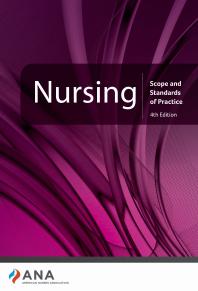 Nursing Scope and Standards of Practice, 4th Edition
Nursing: Scope and Standards of Practice, 4th Edition is an essential document for every nurse. The scope of practice statement answers the who, what, when, where, how, and why questions of nursing. The standards provide authoritative statements of the actions and behaviors that all registered nurses are expected to competently perform, regardless of role, population, specialty, and setting. Each standard is accompanied by detailed competencies for the three practice levels. The product of extensive thought work by many registered nurses, this new edition provides: A revised and contemporary definition of nursing. An extensive discussion of respect, equity, inclusion, and social justice. The new ANA Professional Nursing Model and the revised Model Representing Regulation of Professional Nursing Practice. An expanded discussion of the application of ethics in nursing. A complete picture of the dynamic and complex practice of nursing and its membership and evolving boundaries. 18 national standards of practice and professional performance and their accompanying competencies. This premier professional resource informs and guides nurses in their vital work providing safe, quality, and competent care. It is a must-have for every registered nurse.
Nursing Scope and Standards of Practice, 4th Edition
Nursing: Scope and Standards of Practice, 4th Edition is an essential document for every nurse. The scope of practice statement answers the who, what, when, where, how, and why questions of nursing. The standards provide authoritative statements of the actions and behaviors that all registered nurses are expected to competently perform, regardless of role, population, specialty, and setting. Each standard is accompanied by detailed competencies for the three practice levels. The product of extensive thought work by many registered nurses, this new edition provides: A revised and contemporary definition of nursing. An extensive discussion of respect, equity, inclusion, and social justice. The new ANA Professional Nursing Model and the revised Model Representing Regulation of Professional Nursing Practice. An expanded discussion of the application of ethics in nursing. A complete picture of the dynamic and complex practice of nursing and its membership and evolving boundaries. 18 national standards of practice and professional performance and their accompanying competencies. This premier professional resource informs and guides nurses in their vital work providing safe, quality, and competent care. It is a must-have for every registered nurse.
 Role Development in Professional Nursing Practice
, Sixth Edition, is a comprehensive resource to guide students along their journey as professional nurses. It focuses on the foundations of professional nursing practice, including career development, as well as the management of quality and safe patient care. Through theory, classroom activities, and case studies, the text explores topics such as teamwork and collaboration, communication, leadership, evidence-based practice, patient-centered care, informatics, and ethical and legal issues--essential knowledge and competencies that nursing students need for a successful career. * Coverage of the revised AACN competencies for pre-licensure nursing* Updated content on topics such as conflict resolution and other workplace challenges* Abstract nursing theory and its application to practice* Ethical theories which reflect the diversity of concepts in the practice of nursing* Expanded content on organizational theory and healthcare organizations/systems* New content focused on leadership in nursing practice and competencies
Role Development in Professional Nursing Practice
Role Development in Professional Nursing Practice, Sixth Edition, is a comprehensive resource to guide students along their journey as professional nurses. It focuses on the foundations of professional nursing practice, including career development, as well as the management of quality and safe patient care. Through theory, classroom activities, and case studies, the text explores topics such as teamwork and collaboration, communication, leadership, evidence-based practice, patient-centered care, informatics, and ethical and legal issues--essential knowledge and competencies that nursing students need for a successful career. * Coverage of the revised AACN competencies for pre-licensure nursing* Updated content on topics such as conflict resolution and other workplace challenges* Abstract nursing theory and its application to practice* Ethical theories which reflect the diversity of concepts in the practice of nursing* Expanded content on organizational theory and healthcare organizations/systems* New content focused on leadership in nursing practice and competencies

Go to OneSearch to search for more print books.
Want more on finding print books? Try our How to Use OneSearch guide.
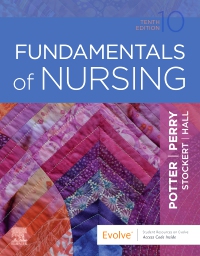 Clinical Companion for Fundamentals of Nursing
Learn the concepts and skills you need to provide excellent nursing care! Fundamentals of Nursing, 10th Edition prepares you to succeed as a nurse by providing a solid foundation in critical thinking, clinical reasoning, nursing theory, evidence-based practice, and patient-centered care in all settings. With illustrated, step-by-step guidelines, this book makes it easy to learn important skills and procedures. Care plans are presented within a nursing process framework, and case studies show how to apply concepts to nursing practice. From an expert author team led by Patricia Potter and Anne Perry, this bestselling nursing textbook helps you develop the understanding and clinical reasoning you need to succeed in the classroom and in your career.
Clinical Companion for Fundamentals of Nursing
Learn the concepts and skills you need to provide excellent nursing care! Fundamentals of Nursing, 10th Edition prepares you to succeed as a nurse by providing a solid foundation in critical thinking, clinical reasoning, nursing theory, evidence-based practice, and patient-centered care in all settings. With illustrated, step-by-step guidelines, this book makes it easy to learn important skills and procedures. Care plans are presented within a nursing process framework, and case studies show how to apply concepts to nursing practice. From an expert author team led by Patricia Potter and Anne Perry, this bestselling nursing textbook helps you develop the understanding and clinical reasoning you need to succeed in the classroom and in your career.


 Critical Care Nursing Made Incredibly Easy!
"Critical Care nursing is a complex area of practice that not only includes the ICU, but can also include emergency departments and postanesthesia care. Nurses providing critical care treat patients with trauma, medical issues, surgical complications, and many other acute and life-threatening problems. To achieve complete comprehension, the education should be simple, understandable, and useful. Critical Care Nursing Made Incredibly Easy helps to achieve that level of understanding"-- Provided by publisher.
Davis's Comprehensive Manual of Laboratory and Diagnostic Tests with Nursing Implications
Best money I have spent in a LONG time. "I'm a nursing student and part of our clinical rotation was to write down our patient's lab results and note on any abnormals why they were abnormal for my particular patient. This book lists out not just the normal levels, but what conditions can contribute to the high or low values. Sometimes it's pages and pages of possible reasons. This baby is a fantastic time saver for me."--Online Reviewer Great for nursing school, you will use it constantly. "Best nursing lab book I've encountered. Definitely worth the money."--Online Reviewer Accuracy. "Very useful in clinical settings. Easy to read! Love this book!"--Katrina, Online Reviewer The information nurses need...when, where, and how they need it! Nursing-focused and easy-to-read, this full-color manual delivers all the information you need to understand how tests work, interpret their results, and provide quality patient care--pre-test, intra-test, and post-test. Tests and procedures are listed in alphabetical order by their complete name for quick reference. The integrated index allows fast searches by abbreviation, synonym, disease/disorder, specimen type, or test classification. Explore MORE online! An access code in new print texts unlocks Fast Find: Lab & Dx, the complete study library online, anytime, anywhere.
Critical Care Nursing Made Incredibly Easy!
"Critical Care nursing is a complex area of practice that not only includes the ICU, but can also include emergency departments and postanesthesia care. Nurses providing critical care treat patients with trauma, medical issues, surgical complications, and many other acute and life-threatening problems. To achieve complete comprehension, the education should be simple, understandable, and useful. Critical Care Nursing Made Incredibly Easy helps to achieve that level of understanding"-- Provided by publisher.
Davis's Comprehensive Manual of Laboratory and Diagnostic Tests with Nursing Implications
Best money I have spent in a LONG time. "I'm a nursing student and part of our clinical rotation was to write down our patient's lab results and note on any abnormals why they were abnormal for my particular patient. This book lists out not just the normal levels, but what conditions can contribute to the high or low values. Sometimes it's pages and pages of possible reasons. This baby is a fantastic time saver for me."--Online Reviewer Great for nursing school, you will use it constantly. "Best nursing lab book I've encountered. Definitely worth the money."--Online Reviewer Accuracy. "Very useful in clinical settings. Easy to read! Love this book!"--Katrina, Online Reviewer The information nurses need...when, where, and how they need it! Nursing-focused and easy-to-read, this full-color manual delivers all the information you need to understand how tests work, interpret their results, and provide quality patient care--pre-test, intra-test, and post-test. Tests and procedures are listed in alphabetical order by their complete name for quick reference. The integrated index allows fast searches by abbreviation, synonym, disease/disorder, specimen type, or test classification. Explore MORE online! An access code in new print texts unlocks Fast Find: Lab & Dx, the complete study library online, anytime, anywhere.
 Diseases & Disorders: The World's Best Anatomical Charts
Featuring more than 85 vibrant, fully annotated charts--19 new to this edition--this updated fourth edition of Diseases and Disorders: The World's Best Anatomical Charts is a perfect quick reference for medical and nursing students and an ideal visual aid for patient education. Printed on oversized, cardstock pages and compiled in a convenient, 10" x 12" spiral-bound volume with a laminated cover, these full-color charts created by some of the world's best medical illustrators illustrate and explain common diseases and disorders of the brain; heart; GI tract; eye and ear; endocrine, muscular, skeletal, reproductive, and respiratory systems; dental diseases; infectious diseases; healthy lifestyle issues; and cancer. Nineteen new charts cover Schizophrenia, Ovarian Cancer, Multiple Myeloma, Liver Cancer, Pancreatic Cancer, Prostate Cancer, Heart Failure, Peripheral Artery Disease, UC/Crohn's Disease, Irritable Bowel Syndrome, Age-Related Macular Degeneration, and more. All charts have been reviewed and updated. Medical terminology and easy-to-understand supporting text are printed directly on each chart. Every chart depicts an aspect of human anatomy, physiology, and disease presented in a clear, visual presentation. The book is ideal as a review resource or quick reference for studying human anatomy or for patient consultation and education.
Diseases & Disorders: The World's Best Anatomical Charts
Featuring more than 85 vibrant, fully annotated charts--19 new to this edition--this updated fourth edition of Diseases and Disorders: The World's Best Anatomical Charts is a perfect quick reference for medical and nursing students and an ideal visual aid for patient education. Printed on oversized, cardstock pages and compiled in a convenient, 10" x 12" spiral-bound volume with a laminated cover, these full-color charts created by some of the world's best medical illustrators illustrate and explain common diseases and disorders of the brain; heart; GI tract; eye and ear; endocrine, muscular, skeletal, reproductive, and respiratory systems; dental diseases; infectious diseases; healthy lifestyle issues; and cancer. Nineteen new charts cover Schizophrenia, Ovarian Cancer, Multiple Myeloma, Liver Cancer, Pancreatic Cancer, Prostate Cancer, Heart Failure, Peripheral Artery Disease, UC/Crohn's Disease, Irritable Bowel Syndrome, Age-Related Macular Degeneration, and more. All charts have been reviewed and updated. Medical terminology and easy-to-understand supporting text are printed directly on each chart. Every chart depicts an aspect of human anatomy, physiology, and disease presented in a clear, visual presentation. The book is ideal as a review resource or quick reference for studying human anatomy or for patient consultation and education.
 Dr. Nurse
An analysis of the efforts of American nurses to establish nursing as an academic discipline and nurses as valued researchers in the decades after World War II.
Nurses represent the largest segment of the U.S. health care workforce and spend significantly more time with patients than any other member of the health care team. Dr. Nurse probes their history to examine major changes that have taken place in American health care in the second half of the twentieth century. The book reveals how federal and state health and higher education policies shaped education within health professions after World War II. Starting in the 1950s, academic nurses sought to construct a science of nursing--distinct from that of the related biomedical or behavioral sciences--that would provide the basis for nursing practice. Their efforts transformed nursing's labor into a valuable site of knowledge production and proved how the application of their knowledge was integral to improving patient outcomes. Exploring the knowledge claims, strategies, and politics involved as academic nurses negotiated their roles and nursing's future, Dr. Nurse highlights how state-supported health centers have profoundly shaped nursing education and health care delivery.
Dr. Nurse
An analysis of the efforts of American nurses to establish nursing as an academic discipline and nurses as valued researchers in the decades after World War II.
Nurses represent the largest segment of the U.S. health care workforce and spend significantly more time with patients than any other member of the health care team. Dr. Nurse probes their history to examine major changes that have taken place in American health care in the second half of the twentieth century. The book reveals how federal and state health and higher education policies shaped education within health professions after World War II. Starting in the 1950s, academic nurses sought to construct a science of nursing--distinct from that of the related biomedical or behavioral sciences--that would provide the basis for nursing practice. Their efforts transformed nursing's labor into a valuable site of knowledge production and proved how the application of their knowledge was integral to improving patient outcomes. Exploring the knowledge claims, strategies, and politics involved as academic nurses negotiated their roles and nursing's future, Dr. Nurse highlights how state-supported health centers have profoundly shaped nursing education and health care delivery.
 E. R. Nurses: True Stories from America's Greatest Unsung Heroes
They save our lives every day, and we've never heard their stories. The life-or-death intensity of working on the front lines, from America's greatest unsung heroes. "The compassion, the work ethic, and the selflessness of nurses ... are given the respect they deserve and captured beautifully here." -Sanjay Gupta, MD, neurosurgeon and chief medical correspondent, CNN "James Patterson's account of the twilight world between life and death that nurses inhabit is one of the most moving things I have ever read." -Sebastian Junger, author of Freedom and The Perfect Storm Around the clock, across the country, these highly skilled and compassionate men and women sacrifice and struggle for us and our families. You have never heard their true stories. Not like this. From big-city and small-town hospitals. From behind the scenes. From the heart. This book will make you laugh, make you cry, make you understand. When we're at our worst, E.R. nurses are at their best.
E. R. Nurses: True Stories from America's Greatest Unsung Heroes
They save our lives every day, and we've never heard their stories. The life-or-death intensity of working on the front lines, from America's greatest unsung heroes. "The compassion, the work ethic, and the selflessness of nurses ... are given the respect they deserve and captured beautifully here." -Sanjay Gupta, MD, neurosurgeon and chief medical correspondent, CNN "James Patterson's account of the twilight world between life and death that nurses inhabit is one of the most moving things I have ever read." -Sebastian Junger, author of Freedom and The Perfect Storm Around the clock, across the country, these highly skilled and compassionate men and women sacrifice and struggle for us and our families. You have never heard their true stories. Not like this. From big-city and small-town hospitals. From behind the scenes. From the heart. This book will make you laugh, make you cry, make you understand. When we're at our worst, E.R. nurses are at their best.
 Elsevier's 2024 Intravenous Medications
Find the essential information you need to safely administer more than 400 intravenous drugs! For nearly 50 years, Elsevier's Intravenous Medications: A Handbook for Nurses and Health Professionals has been a trusted resource for complete, accurate drug information in a concise, quick-access format. New to the 2024 edition are 8 monographs of the most recent IV drugs to be approved by the FDA, in addition to updated drug uses, interactions, precautions, alerts, and patient teaching instructions for all current IV drugs. Known as the #1 IV drug handbook on the market, this annual publication is ideal for use in critical care areas, at the nursing station, in the office, and in public health and home care settings. Detailed monographs on more than 400 IV drugs provide an impressive breadth of coverage that goes well beyond any comparable drug reference. Individual monographs include the drug name, phonetic pronunciation, usual dose, dilution, compatibility, rate of administration, actions, indications and uses, contraindications, precautions, interactions, side effects, antidote, and more. Additional drug monographs are provided on the Evolve website. Highlighted Black Box Warnings make it easy to locate information on medications with serious safety risks. Blue-screened text calls attention to special circumstances not covered by Black Box Warnings. Dosage and dilution charts within monographs provide quick summaries of essential clinical information. Life-stage dosage variances are highlighted for geriatric, pediatric, infant, and neonatal patients. Convenient, A-to-Z format organizes all drug monographs by generic name, allowing you to find any drug in seconds. Spiral binding allows the book to lie flat, leaving your hands free to perform other tasks. NEW! Drug monographs for 8 newly approved drugs by the FDA include the most current information. NEW! Updates on drug uses, interactions, precautions, alerts, and more are included throughout the guide to reflect changes to existing medications. NEW! Information on preparation and administration of injectable drugs from the National Coalition for IV Push Safety
Elsevier's 2024 Intravenous Medications
Find the essential information you need to safely administer more than 400 intravenous drugs! For nearly 50 years, Elsevier's Intravenous Medications: A Handbook for Nurses and Health Professionals has been a trusted resource for complete, accurate drug information in a concise, quick-access format. New to the 2024 edition are 8 monographs of the most recent IV drugs to be approved by the FDA, in addition to updated drug uses, interactions, precautions, alerts, and patient teaching instructions for all current IV drugs. Known as the #1 IV drug handbook on the market, this annual publication is ideal for use in critical care areas, at the nursing station, in the office, and in public health and home care settings. Detailed monographs on more than 400 IV drugs provide an impressive breadth of coverage that goes well beyond any comparable drug reference. Individual monographs include the drug name, phonetic pronunciation, usual dose, dilution, compatibility, rate of administration, actions, indications and uses, contraindications, precautions, interactions, side effects, antidote, and more. Additional drug monographs are provided on the Evolve website. Highlighted Black Box Warnings make it easy to locate information on medications with serious safety risks. Blue-screened text calls attention to special circumstances not covered by Black Box Warnings. Dosage and dilution charts within monographs provide quick summaries of essential clinical information. Life-stage dosage variances are highlighted for geriatric, pediatric, infant, and neonatal patients. Convenient, A-to-Z format organizes all drug monographs by generic name, allowing you to find any drug in seconds. Spiral binding allows the book to lie flat, leaving your hands free to perform other tasks. NEW! Drug monographs for 8 newly approved drugs by the FDA include the most current information. NEW! Updates on drug uses, interactions, precautions, alerts, and more are included throughout the guide to reflect changes to existing medications. NEW! Information on preparation and administration of injectable drugs from the National Coalition for IV Push Safety
 Emergency Nursing Made Incredibly Easy
Worried about handling the challenges of emergency nursing? Skillfully handle the daily demands of the emergency room, with the fully updated Emergency Nursing Made Incredibly Easy!®, 3rd Edition. Full of colorful illustrations, humor and friendly expert advice, this go-to reference offers solid, step-by-step guidance on the assessments, exams, tests and treatments involved in emergency, trauma and critical care -- all in the enjoyable Incredibly Easy® style.
Emergency Nursing Made Incredibly Easy
Worried about handling the challenges of emergency nursing? Skillfully handle the daily demands of the emergency room, with the fully updated Emergency Nursing Made Incredibly Easy!®, 3rd Edition. Full of colorful illustrations, humor and friendly expert advice, this go-to reference offers solid, step-by-step guidance on the assessments, exams, tests and treatments involved in emergency, trauma and critical care -- all in the enjoyable Incredibly Easy® style.
 Fast Facts for the Hospice Nurse
Provides comprehensive, current information for addressing the physical, psychological, and spiritual needs of hospice patients and their families Substantially updated and expanded, the second edition of this quick-access reference for hospice nurses continues to deliver the most current information on the clinical and administrative duties of the hospice nurse. It encompasses important regulatory changes and milestones, providing timely information on cultural issues, special communication considerations, and hospice care's enduring growth. This resource provides new content on levels of care, assessment and symptom management, and occupational stress, burnout, and self-care. New treatment guidelines and algorithms are included, as are updates on quality measures, the reimbursement schedule, compliance initiatives, and electronic documentation with specific examples. An indispensable clinical resource, the book is a valuable reference for nurses who are seeking to specialize in hospice, those who work in long-term care settings, post-acute care settings, acute care setting, and those who are seeking to enhance their knowledge of end-of-life care within other specialties. New to the Second Edition: Includes new regulatory changes/milestones, such as The National Quality Forum New Priorities for Action 2019 Provides updated information about levels of care, particularly the Last 7 Days rule from Medicare Covers the use of cannabis, non-pharmacological pain management interventions, care of the dying patient, and post-mortem care New chapters are included on the hospice nurse's role as case manager, patient discharge, religious and cultural influences on end-of-life care, pain assessment and interventions, wound care, care of the dying patient, and post-mortem care. Key Features: Reflects key competencies for the hospice nurse as designated by the Hospice and Palliative Nurses Association Delineates clinical and administrative responsibilities of the hospice nurse Simplifies complex information such as Medicare regulations and compliance Provides screening tools for depression, anxiety, and wound risk Includes the Palliative Performance Scale and the Karnofsky Performance Scale Serves as a concise study resource for certification
Fast Facts for the Hospice Nurse
Provides comprehensive, current information for addressing the physical, psychological, and spiritual needs of hospice patients and their families Substantially updated and expanded, the second edition of this quick-access reference for hospice nurses continues to deliver the most current information on the clinical and administrative duties of the hospice nurse. It encompasses important regulatory changes and milestones, providing timely information on cultural issues, special communication considerations, and hospice care's enduring growth. This resource provides new content on levels of care, assessment and symptom management, and occupational stress, burnout, and self-care. New treatment guidelines and algorithms are included, as are updates on quality measures, the reimbursement schedule, compliance initiatives, and electronic documentation with specific examples. An indispensable clinical resource, the book is a valuable reference for nurses who are seeking to specialize in hospice, those who work in long-term care settings, post-acute care settings, acute care setting, and those who are seeking to enhance their knowledge of end-of-life care within other specialties. New to the Second Edition: Includes new regulatory changes/milestones, such as The National Quality Forum New Priorities for Action 2019 Provides updated information about levels of care, particularly the Last 7 Days rule from Medicare Covers the use of cannabis, non-pharmacological pain management interventions, care of the dying patient, and post-mortem care New chapters are included on the hospice nurse's role as case manager, patient discharge, religious and cultural influences on end-of-life care, pain assessment and interventions, wound care, care of the dying patient, and post-mortem care. Key Features: Reflects key competencies for the hospice nurse as designated by the Hospice and Palliative Nurses Association Delineates clinical and administrative responsibilities of the hospice nurse Simplifies complex information such as Medicare regulations and compliance Provides screening tools for depression, anxiety, and wound risk Includes the Palliative Performance Scale and the Karnofsky Performance Scale Serves as a concise study resource for certification
 Fluids & Electrolytes Made Incredibly Easy
For expert, confidence-building guidance on handling fluids and electrolytes, turn to the irreplaceable quick-reference guide Fluids & Electrolytes Made Incredibly Easy!®, 7th Edition. Written in the enjoyable Incredibly Easy!® style, it offers step-by-step direction on balancing fluids and electrolytes, understanding fluid imbalances and the disorders that cause them, treating imbalances and more. This real-world guide supports students and new nurses in class, on the unit and with NCLEX® preparation, while also serving as a solid refresher for experienced nurses. Learn top-level skills to manage fluids and electrolytes: NEW and updated content on fluid-related concepts in easy-to-follow definitions Updated and revised content that offers clear definitions and on-the-job how-to's Explains the science of fluid and electrolytes in clear and practical terms as they relate to patient care Patient care examples that include common fluids-related diagnoses, appropriate patient outcomes and the basis for each recommended treatment Easy-to-follow sections that offer practical insight and guidance on nursing skills: Balancing basics - balancing fluids, electrolytes, and acids and bases Fluid and electrolyte imbalances - imbalances in fluids, sodium, potassium, magnesium, calcium, phosphorus, chloride, and acids and bases Disorders that cause imbalances - including heat-related illnesses, heart failure, respiratory failure, excessive GI fluid loss, acute pancreatitis, renal failure and burns Treating imbalances, including fluid losses and excesses - IV fluid replacement and total parenteral nutrition Lists fluid and electrolyte imbalances commonly seen in pediatric and elderly patients Guide to transfusing blood Special chapter features offer invaluable recaps and quick explanations: Just the facts - quick summary of content at the start of each chapter "Nurse Joy and Jake" - offer expert insights, important care reminders, and reassurance throughout Ages and stages - age-related changes and how they affect a patient's health Teaching points - patient-teaching tips that help patients prevent recurrence of the problem That's a wrap - quick end-of-chapter review of chapter content Memory jogger - memory aids that help you grasp and remember difficult concepts Quick quiz - end-of-chapter NCLEX®-style practice questions Practice Makes Perfect - end-of-book practice exam with 60 NCLEX®-style questions About the Clinical Editor Laura M. Willis, DNP, APRN-CNP, CMSRN, is a Family Nurse Practitioner at Mercy Health Physicians in Cincinnati, Ohio.
Fluids & Electrolytes Made Incredibly Easy
For expert, confidence-building guidance on handling fluids and electrolytes, turn to the irreplaceable quick-reference guide Fluids & Electrolytes Made Incredibly Easy!®, 7th Edition. Written in the enjoyable Incredibly Easy!® style, it offers step-by-step direction on balancing fluids and electrolytes, understanding fluid imbalances and the disorders that cause them, treating imbalances and more. This real-world guide supports students and new nurses in class, on the unit and with NCLEX® preparation, while also serving as a solid refresher for experienced nurses. Learn top-level skills to manage fluids and electrolytes: NEW and updated content on fluid-related concepts in easy-to-follow definitions Updated and revised content that offers clear definitions and on-the-job how-to's Explains the science of fluid and electrolytes in clear and practical terms as they relate to patient care Patient care examples that include common fluids-related diagnoses, appropriate patient outcomes and the basis for each recommended treatment Easy-to-follow sections that offer practical insight and guidance on nursing skills: Balancing basics - balancing fluids, electrolytes, and acids and bases Fluid and electrolyte imbalances - imbalances in fluids, sodium, potassium, magnesium, calcium, phosphorus, chloride, and acids and bases Disorders that cause imbalances - including heat-related illnesses, heart failure, respiratory failure, excessive GI fluid loss, acute pancreatitis, renal failure and burns Treating imbalances, including fluid losses and excesses - IV fluid replacement and total parenteral nutrition Lists fluid and electrolyte imbalances commonly seen in pediatric and elderly patients Guide to transfusing blood Special chapter features offer invaluable recaps and quick explanations: Just the facts - quick summary of content at the start of each chapter "Nurse Joy and Jake" - offer expert insights, important care reminders, and reassurance throughout Ages and stages - age-related changes and how they affect a patient's health Teaching points - patient-teaching tips that help patients prevent recurrence of the problem That's a wrap - quick end-of-chapter review of chapter content Memory jogger - memory aids that help you grasp and remember difficult concepts Quick quiz - end-of-chapter NCLEX®-style practice questions Practice Makes Perfect - end-of-book practice exam with 60 NCLEX®-style questions About the Clinical Editor Laura M. Willis, DNP, APRN-CNP, CMSRN, is a Family Nurse Practitioner at Mercy Health Physicians in Cincinnati, Ohio.
 Magill's Medical Guide Volumes 1 -5
Covers diseases, disorders, treatments, procedures, specialties, biology, and issues in an easy-to-use A-Z format, with sidebars addressing recent developments in medicine and concise information boxes for all diseases and disorders. In addition to completely new essays in this edition, all entries from the previous edition have been evaluated and updated by a panel of Medical Editors to ensure their currency and accuracy.
Magill's Medical Guide Volumes 1 -5
Covers diseases, disorders, treatments, procedures, specialties, biology, and issues in an easy-to-use A-Z format, with sidebars addressing recent developments in medicine and concise information boxes for all diseases and disorders. In addition to completely new essays in this edition, all entries from the previous edition have been evaluated and updated by a panel of Medical Editors to ensure their currency and accuracy.
 Medical-Surgical Nursing Made Incredibly Easy
Feeling anxious or unsure about medical-surgical nursing care? Get grounded in the latest best practices, with the freshly updated Medical-Surgical Nursing Made Incredibly Easy!®, 5th Edition. This colorful fully illustrated guide offers clear, concise descriptions of crucial medical-surgical nursing concepts and procedures, with learning aids that help you grasp skills and concepts easily, in an enjoyable Incredibly Easy style. From assessment and diagnostics to current evidence-based treatments and interventions, this is the perfect backup to class materials, helpful support for new nurses, and a handy refresher for experienced nurses. Be expertly guided into a solid foundation in medical-surgical care, with: NEW and updated statistics and guidelines on current medical-surgical nursing practice in a concise, quick-scan outline format The "need-to-know" basics, including the most common disorders medical-surgical nurses encounter Chapters address disorders by body system - neurologic, cardiovascular, respiratory, gastrointestinal, endocrine, renal and urologic, reproductive, musculoskeletal, and more Chapters offer vital foundational knowledge, with expert direction on: Essential elements of medical-surgical nursing practice and the nursing process Fluids and electrolytes, perioperative care, and pain management Diagnostic testing - CT, MRI, and PET scan imaging, x-rays, biopsies, EMGs, and more Additional chapters on cancer care, obesity, gerontologic care, and end-of-life care Current data and best practices on assessing and treating common disorders - Reviews of anatomy and physiology, step-by-step guidance on assessments and history-taking, and diagnostic testing, including patient preparation, monitoring, teaching points, and developing a plan of care Hundreds of colorful diagrams, drawings, and charts that illustrate core terms and concepts, with easy-to-retain definitions "Practice Makes Perfect" end-of-book practice exam with NCLEX®-style questions in current exam format Chapter features include: Memory jogger - Acronyms and other memory tricks that help you remember key concepts and treatments A closer look - Illustrations that explain anatomy, physiology, and complex pathways Education edge - Practical guidance for effective patient teaching What do I do? - Steps to take in emergency situations Stop, look, and listen - Elements of assessment for a particular body system Weighing the evidence - Evidence-based practice pointers that support nursing actions Quick quiz - End-of-chapter multiple-choice questions to help you retain chapter content, followed by answers and rationales Nurse Joy and Jake illustrated characters offer tips and insights throughout About the Clinical Editors Keelin Cromar, MSN, RN, is Adjunct Nursing Faculty at Midwestern State University in Wichita Falls, TX Casey Moebius, DNP, RN, is an Assistant Professor in the Department of Nurse Education at Del Mar College in Corpus Christi, Texas
Medical-Surgical Nursing Made Incredibly Easy
Feeling anxious or unsure about medical-surgical nursing care? Get grounded in the latest best practices, with the freshly updated Medical-Surgical Nursing Made Incredibly Easy!®, 5th Edition. This colorful fully illustrated guide offers clear, concise descriptions of crucial medical-surgical nursing concepts and procedures, with learning aids that help you grasp skills and concepts easily, in an enjoyable Incredibly Easy style. From assessment and diagnostics to current evidence-based treatments and interventions, this is the perfect backup to class materials, helpful support for new nurses, and a handy refresher for experienced nurses. Be expertly guided into a solid foundation in medical-surgical care, with: NEW and updated statistics and guidelines on current medical-surgical nursing practice in a concise, quick-scan outline format The "need-to-know" basics, including the most common disorders medical-surgical nurses encounter Chapters address disorders by body system - neurologic, cardiovascular, respiratory, gastrointestinal, endocrine, renal and urologic, reproductive, musculoskeletal, and more Chapters offer vital foundational knowledge, with expert direction on: Essential elements of medical-surgical nursing practice and the nursing process Fluids and electrolytes, perioperative care, and pain management Diagnostic testing - CT, MRI, and PET scan imaging, x-rays, biopsies, EMGs, and more Additional chapters on cancer care, obesity, gerontologic care, and end-of-life care Current data and best practices on assessing and treating common disorders - Reviews of anatomy and physiology, step-by-step guidance on assessments and history-taking, and diagnostic testing, including patient preparation, monitoring, teaching points, and developing a plan of care Hundreds of colorful diagrams, drawings, and charts that illustrate core terms and concepts, with easy-to-retain definitions "Practice Makes Perfect" end-of-book practice exam with NCLEX®-style questions in current exam format Chapter features include: Memory jogger - Acronyms and other memory tricks that help you remember key concepts and treatments A closer look - Illustrations that explain anatomy, physiology, and complex pathways Education edge - Practical guidance for effective patient teaching What do I do? - Steps to take in emergency situations Stop, look, and listen - Elements of assessment for a particular body system Weighing the evidence - Evidence-based practice pointers that support nursing actions Quick quiz - End-of-chapter multiple-choice questions to help you retain chapter content, followed by answers and rationales Nurse Joy and Jake illustrated characters offer tips and insights throughout About the Clinical Editors Keelin Cromar, MSN, RN, is Adjunct Nursing Faculty at Midwestern State University in Wichita Falls, TX Casey Moebius, DNP, RN, is an Assistant Professor in the Department of Nurse Education at Del Mar College in Corpus Christi, Texas
 Mosby's® Diagnostic and Laboratory Test Reference
Perform today's important lab tests safely and accurately! With test entries organized the way you'll use them, Mosby's® Diagnostic & Laboratory Test Reference makes it fast and easy to look up current testing information. Concise monographs are arranged alphabetically and include vital information such as the type of test, alternate or abbreviated test names, test explanation, normal and abnormal findings, possible critical values, contraindications, potential complications, interfering factors, and guidelines to patient care before, during, and after the test. From the experienced author team of Kathleen Deska Pagana, Timothy J. Pagana, and Theresa Noel Pagana, this bestselling handbook offers a compact size, durable cover, and A-to-Z thumb tabs for quick reference while on the job. Alphabetically organized tests offer quick reference with A-to-Z thumb tabs. Each test entry begins on a new page, making tests easy to find. User's Guide to Test Preparation and Procedures provides an overview and guidelines for each type of laboratory test and diagnostic procedure to ensure that each is performed accurately and safely, and to prevent having to repeat a test due to an error. Normal findings for adult, elderly, and pediatric patients are included where applicable. Abnormal findings are highlighted with directional arrows, and are now alphabetized for fast reference. Possible critical values are highlighted to alert you to situations requiring immediate intervention. Icons for drug-related interfering factors alert you to the effects of pharmacologic agents on tests. Icons for patient teaching-related care indicate information that should be shared with patients and their families. Abbreviations for diagnostic and laboratory tests are provided inside the back cover, and appendices list blood tests used for disease and organ panels as well as symbols and units of measurement. Appendix with lists of tests by body system and by type allow you to quickly locate related studies. Inside front cover includes pages with easy-to-find information on common reference ranges for healthy adults, routine blood testing, and routine urine testing. Durable cover with rounded edges makes this manual ideal for use in the practice setting. NEW! Thirteen new monographs cover the latest tests and procedures; 11 outdated monographs are removed. NEW! Updated content reflects the latest research relating to accuracy of testing, diagnostic values of results, and patient care and education for each test.
Mosby's® Diagnostic and Laboratory Test Reference
Perform today's important lab tests safely and accurately! With test entries organized the way you'll use them, Mosby's® Diagnostic & Laboratory Test Reference makes it fast and easy to look up current testing information. Concise monographs are arranged alphabetically and include vital information such as the type of test, alternate or abbreviated test names, test explanation, normal and abnormal findings, possible critical values, contraindications, potential complications, interfering factors, and guidelines to patient care before, during, and after the test. From the experienced author team of Kathleen Deska Pagana, Timothy J. Pagana, and Theresa Noel Pagana, this bestselling handbook offers a compact size, durable cover, and A-to-Z thumb tabs for quick reference while on the job. Alphabetically organized tests offer quick reference with A-to-Z thumb tabs. Each test entry begins on a new page, making tests easy to find. User's Guide to Test Preparation and Procedures provides an overview and guidelines for each type of laboratory test and diagnostic procedure to ensure that each is performed accurately and safely, and to prevent having to repeat a test due to an error. Normal findings for adult, elderly, and pediatric patients are included where applicable. Abnormal findings are highlighted with directional arrows, and are now alphabetized for fast reference. Possible critical values are highlighted to alert you to situations requiring immediate intervention. Icons for drug-related interfering factors alert you to the effects of pharmacologic agents on tests. Icons for patient teaching-related care indicate information that should be shared with patients and their families. Abbreviations for diagnostic and laboratory tests are provided inside the back cover, and appendices list blood tests used for disease and organ panels as well as symbols and units of measurement. Appendix with lists of tests by body system and by type allow you to quickly locate related studies. Inside front cover includes pages with easy-to-find information on common reference ranges for healthy adults, routine blood testing, and routine urine testing. Durable cover with rounded edges makes this manual ideal for use in the practice setting. NEW! Thirteen new monographs cover the latest tests and procedures; 11 outdated monographs are removed. NEW! Updated content reflects the latest research relating to accuracy of testing, diagnostic values of results, and patient care and education for each test.
 Nursing Scope and Standards of Practice, 4th Edition
"The Nursing: Scope and Standards of Practice, 4th Edition, is an essential document for every nurse practicing in the United States. The scope of practice statement answers the who, what, when, where, how, and why questions of nursing. The standards provide authoritative statements of the actions and behaviors that all registered nurses are expected to competently perform, regardless of role, population, specialty, and setting. Each standard is accompanied by detailed competencies for the three practice levels"
Nursing Scope and Standards of Practice, 4th Edition
"The Nursing: Scope and Standards of Practice, 4th Edition, is an essential document for every nurse practicing in the United States. The scope of practice statement answers the who, what, when, where, how, and why questions of nursing. The standards provide authoritative statements of the actions and behaviors that all registered nurses are expected to competently perform, regardless of role, population, specialty, and setting. Each standard is accompanied by detailed competencies for the three practice levels"
 Pediatric Nursing Made Incredibly Easy!
Create a strong foundation in pediatric nursing care -- and gain empowering skills and confidence -- with the fully updated Pediatric Nursing made Incredibly Easy!®, 3rd Edition. This fully illustrated, enjoyable guide offers easy-to-remember ways to strengthen your understanding and retention of common pediatric conditions at every level of child development. An irreplaceable on-the-job reference for all new nurses, this go-to resource supports class materials, is the ideal study partner for NCLEX®, HESI or CPN exam preparation, and is an excellent refresher for experienced nurses. Absorb expert knowledge and real-life guidance on pediatric nursing care: NEW and updated content in concise, bulleted format for easy quick-reference End-of-book learning support - the "Practice Makes Perfect" practice test that mimics NCLEX® style and content Dozens of colorful diagrams and illustrations that outline core terms and concepts, with easy-to-retain definitions and clinical guidance on topics such as: The role of the pediatric nurse, family-centered care, and pediatric care standards Pediatric pain assessment and management Meeting the needs of the hospitalized and special needs child Developmental aspects of pediatric care - factors that influence growth and development in infancy, early childhood, middle childhood and adolescence Common pediatric conditions affecting different body systems, including problems in the neurologic, cardiovascular, respiratory, urinary, musculoskeletal, gastrointestinal, endocrine and metabolic, hematologic and immunologic, and dermatologic systems Infectious diseases and immunizations Special chapter features include: Just the facts - a quick summary of content at the start of each chapter "Nurse Joy and Jake" - expert insights that explain key concepts, provide important care reminders and offer reassurance Cultured pearls - insights on unique cultural aspects of care, by cultural group Memory joggers - memory aids that help you grasp and retain difficult concepts Growing pains - descriptions, expectations and risks for each developmental stage It's all relative - teaching tips and checklists for family education Advice from experts - helpful tips and insights from experienced pediatric nurses Education edge - teaching tips and checklists for patient education Quick quiz - multiple-choice, end-of-chapter questions written in NCLEX® format, followed by answers and rationales About the Clinical Editor Mikki Meadows-Oliver, PhD, MPH, PNP-BC, RN, is an Assistant Professor at the Yale University School of Nursing and holds a joint clinical appointment at the Pediatric Lead Poisoning Prevention Program at Yale New Haven Hospital, New Haven, Connecticut.
Pediatric Nursing Made Incredibly Easy!
Create a strong foundation in pediatric nursing care -- and gain empowering skills and confidence -- with the fully updated Pediatric Nursing made Incredibly Easy!®, 3rd Edition. This fully illustrated, enjoyable guide offers easy-to-remember ways to strengthen your understanding and retention of common pediatric conditions at every level of child development. An irreplaceable on-the-job reference for all new nurses, this go-to resource supports class materials, is the ideal study partner for NCLEX®, HESI or CPN exam preparation, and is an excellent refresher for experienced nurses. Absorb expert knowledge and real-life guidance on pediatric nursing care: NEW and updated content in concise, bulleted format for easy quick-reference End-of-book learning support - the "Practice Makes Perfect" practice test that mimics NCLEX® style and content Dozens of colorful diagrams and illustrations that outline core terms and concepts, with easy-to-retain definitions and clinical guidance on topics such as: The role of the pediatric nurse, family-centered care, and pediatric care standards Pediatric pain assessment and management Meeting the needs of the hospitalized and special needs child Developmental aspects of pediatric care - factors that influence growth and development in infancy, early childhood, middle childhood and adolescence Common pediatric conditions affecting different body systems, including problems in the neurologic, cardiovascular, respiratory, urinary, musculoskeletal, gastrointestinal, endocrine and metabolic, hematologic and immunologic, and dermatologic systems Infectious diseases and immunizations Special chapter features include: Just the facts - a quick summary of content at the start of each chapter "Nurse Joy and Jake" - expert insights that explain key concepts, provide important care reminders and offer reassurance Cultured pearls - insights on unique cultural aspects of care, by cultural group Memory joggers - memory aids that help you grasp and retain difficult concepts Growing pains - descriptions, expectations and risks for each developmental stage It's all relative - teaching tips and checklists for family education Advice from experts - helpful tips and insights from experienced pediatric nurses Education edge - teaching tips and checklists for patient education Quick quiz - multiple-choice, end-of-chapter questions written in NCLEX® format, followed by answers and rationales About the Clinical Editor Mikki Meadows-Oliver, PhD, MPH, PNP-BC, RN, is an Assistant Professor at the Yale University School of Nursing and holds a joint clinical appointment at the Pediatric Lead Poisoning Prevention Program at Yale New Haven Hospital, New Haven, Connecticut.
 The Practical Guide to Hipaa Privacy and Security Compliance by
Following in the footsteps of its bestselling predecessor, The Practical Guide to HIPAA Privacy and Security Compliance, Second Edition is a one-stop, up-to-date resource on Health Insurance Portability and Accountability Act (HIPAA) privacy and security, including details on the HITECH Act, the 2013 Omnibus Rule, and the pending rules. Updated and revised with several new sections, this edition defines what HIPAA is, what it requires, and what you need to do to achieve compliance. The book provides an easy-to-understand overview of HIPAA privacy and security rules and compliance tasks. Supplying authoritative insights into real-world HIPAA privacy and security issues, it summarizes the analysis, training, and technology needed to properly plan and implement privacy and security policies, training, and an overall program to manage information risks. Instead of focusing on technical jargon, the book spells out what your organization must do to achieve and maintain compliance requirements on an ongoing basis.
The Practical Guide to Hipaa Privacy and Security Compliance by
Following in the footsteps of its bestselling predecessor, The Practical Guide to HIPAA Privacy and Security Compliance, Second Edition is a one-stop, up-to-date resource on Health Insurance Portability and Accountability Act (HIPAA) privacy and security, including details on the HITECH Act, the 2013 Omnibus Rule, and the pending rules. Updated and revised with several new sections, this edition defines what HIPAA is, what it requires, and what you need to do to achieve compliance. The book provides an easy-to-understand overview of HIPAA privacy and security rules and compliance tasks. Supplying authoritative insights into real-world HIPAA privacy and security issues, it summarizes the analysis, training, and technology needed to properly plan and implement privacy and security policies, training, and an overall program to manage information risks. Instead of focusing on technical jargon, the book spells out what your organization must do to achieve and maintain compliance requirements on an ongoing basis.
 Self-Care for Nurses: 100+ Ways to Rest, Reset, and Feel Your Best
Take care of your patients by taking care of yourself with these 100 self-care activities specifically designed to help nurses reduce stress, feel their best--and ready to make a difference! There's no doubt about it: today's healthcare workers have a lot on their plates. Between balancing the needs of your patients and giving your all to support your coworkers, getting burnt out and overwhelmed is a real risk. So how do you make sure you take time for yourself to recharge? With Self-Care for Nurses, you'll find 100 activities specifically designed to help you relax, take a break, and feel reenergized. Whether you need a quick pick-me-up in the middle of your shift or are looking for some new ways to unwind after the workday is over, you'll find helpful solutions like: -Writing a list of your accomplishments -Practicing yoga -Learning how to ask for help -And much more! Whether you're a new nurse or a seasoned veteran, self-care is important for all. Start your nursing self-care practice--today!
Self-Care for Nurses: 100+ Ways to Rest, Reset, and Feel Your Best
Take care of your patients by taking care of yourself with these 100 self-care activities specifically designed to help nurses reduce stress, feel their best--and ready to make a difference! There's no doubt about it: today's healthcare workers have a lot on their plates. Between balancing the needs of your patients and giving your all to support your coworkers, getting burnt out and overwhelmed is a real risk. So how do you make sure you take time for yourself to recharge? With Self-Care for Nurses, you'll find 100 activities specifically designed to help you relax, take a break, and feel reenergized. Whether you need a quick pick-me-up in the middle of your shift or are looking for some new ways to unwind after the workday is over, you'll find helpful solutions like: -Writing a list of your accomplishments -Practicing yoga -Learning how to ask for help -And much more! Whether you're a new nurse or a seasoned veteran, self-care is important for all. Start your nursing self-care practice--today!
 Twice As Hard by
"No complete history of black women physicians in the US exists, and what little mention is made of these women in existing histories is often insubstantial or altogether incorrect. In this work of extensive research, Jasmine Brown offers a champions a new history, penning the long-erased stories of nine pioneering black women physicians beginning in 1860, when a black woman first entered medical school. The legacy of black women physicians, began with Dr. Rebecca Lee Crumpler, who graduated from medical school only fourteen months after the Emancipation Proclamation was signed, moved to Richmond, Virginia, and provided medical care for the newly freed slaves who had been neglected and exploited by the medical system. Brown tells the stories of women such as Dr. Edith Irby Jones, the first African American to attend a previously white-only medical school in the Jim Crow South, where she was not allowed to eat lunch with her classmates or use the women's bathroom. Still, Dr. Irby Jones persisted and graduated from medical school, going on to directly inspire other, like Dr. Joycelyn Elders, who, after meeting Dr. Irby Jones, changed her career ambitions from becoming a Dillard's salesclerk to becoming a doctor. In 1993, President Bill Clinton appointed Dr. Elders as the US surgeon general, making her the first African American and second woman to hold this position. Brown tells the stories of these doctors from the perspective of a black woman in medicine. Her journey as a medical student already has parallels to those of black women who entered medicine generations before her. What she uncovers about these women's struggles, their need to work twice as hard and be twice as good, and their ultimate success serves as instruction and inspiration for new generations considering a career in medicine or science"-- Provided by publisher.
Twice As Hard by
"No complete history of black women physicians in the US exists, and what little mention is made of these women in existing histories is often insubstantial or altogether incorrect. In this work of extensive research, Jasmine Brown offers a champions a new history, penning the long-erased stories of nine pioneering black women physicians beginning in 1860, when a black woman first entered medical school. The legacy of black women physicians, began with Dr. Rebecca Lee Crumpler, who graduated from medical school only fourteen months after the Emancipation Proclamation was signed, moved to Richmond, Virginia, and provided medical care for the newly freed slaves who had been neglected and exploited by the medical system. Brown tells the stories of women such as Dr. Edith Irby Jones, the first African American to attend a previously white-only medical school in the Jim Crow South, where she was not allowed to eat lunch with her classmates or use the women's bathroom. Still, Dr. Irby Jones persisted and graduated from medical school, going on to directly inspire other, like Dr. Joycelyn Elders, who, after meeting Dr. Irby Jones, changed her career ambitions from becoming a Dillard's salesclerk to becoming a doctor. In 1993, President Bill Clinton appointed Dr. Elders as the US surgeon general, making her the first African American and second woman to hold this position. Brown tells the stories of these doctors from the perspective of a black woman in medicine. Her journey as a medical student already has parallels to those of black women who entered medicine generations before her. What she uncovers about these women's struggles, their need to work twice as hard and be twice as good, and their ultimate success serves as instruction and inspiration for new generations considering a career in medicine or science"-- Provided by publisher.
 Understanding Ethics for Nursing Students
Ethics have an significant impact on the decisions nurses make in their day-to-day work, so it's important for all student nurses to develop their understanding of ethical frameworks as preparation for future practice. In this book, the author explains ethical ideas, theories and concepts in simple to understand terms, focussing on real-life nursing situations in order to make applying these principles to practice easy. This book will make student nurses consider their own values, and how ethics fit into who they are and how they behave, helping them to unlock this interesting and complex subject. Key features: Fully mapped to the NMC Future Nurse standards of proficiency (2018) A practical guide that explores how ethics applies to nursing and shows you how the theory fits in to the realities of practice Contains real work case studies with an emphasis on ethical decision making Activities challenge students to reflect on their own values, experiences and prejudices and to think about how ethics fits in with who they are and how they behave
Understanding Ethics for Nursing Students
Ethics have an significant impact on the decisions nurses make in their day-to-day work, so it's important for all student nurses to develop their understanding of ethical frameworks as preparation for future practice. In this book, the author explains ethical ideas, theories and concepts in simple to understand terms, focussing on real-life nursing situations in order to make applying these principles to practice easy. This book will make student nurses consider their own values, and how ethics fit into who they are and how they behave, helping them to unlock this interesting and complex subject. Key features: Fully mapped to the NMC Future Nurse standards of proficiency (2018) A practical guide that explores how ethics applies to nursing and shows you how the theory fits in to the realities of practice Contains real work case studies with an emphasis on ethical decision making Activities challenge students to reflect on their own values, experiences and prejudices and to think about how ethics fits in with who they are and how they behave
 The Unofficial Guide to Radiology : 100 Practice Abdominal X-Rays With Full Colour Annotations and Full X-Ray Reports
The Unofficial Guide to Radiology: 100 Practice Abdominal X Rays is the sequel to The Unofficial Guide to Radiology, which has sold 1500 copies in just eight months. This book teaches systematic analysis of Abdominal X Rays. The layout is designed to make the book as relevant to clinical practice as possible; the X-rays are presented in the context of a real life scenario. The reader is asked to interpret the X-ray before turning over the page to reveal a model report accompanied by a fully colour annotated version of the X-ray. Uniquely, all cases provide realistic high quality X Ray images, are annotated in full colour, and are fully reported, following international radiology reporting guidelines. This means the X Rays are explained comprehensively, but with clear annotation so that a complete beginner can follow the thinking of the expert. This book has relevance beyond examinations, for post graduate further education and as a day-to-day reference for professionals.
The Unofficial Guide to Radiology : 100 Practice Abdominal X-Rays With Full Colour Annotations and Full X-Ray Reports
The Unofficial Guide to Radiology: 100 Practice Abdominal X Rays is the sequel to The Unofficial Guide to Radiology, which has sold 1500 copies in just eight months. This book teaches systematic analysis of Abdominal X Rays. The layout is designed to make the book as relevant to clinical practice as possible; the X-rays are presented in the context of a real life scenario. The reader is asked to interpret the X-ray before turning over the page to reveal a model report accompanied by a fully colour annotated version of the X-ray. Uniquely, all cases provide realistic high quality X Ray images, are annotated in full colour, and are fully reported, following international radiology reporting guidelines. This means the X Rays are explained comprehensively, but with clear annotation so that a complete beginner can follow the thinking of the expert. This book has relevance beyond examinations, for post graduate further education and as a day-to-day reference for professionals.


© 2023 COM Library
1200 Amburn Road, Texas City, Texas 77591
409-933-8448 . FAX 409-933-8030
This work is licensed under a Creative Commons Attribution-NonCommercial 4.0 International License
Class Poll



